
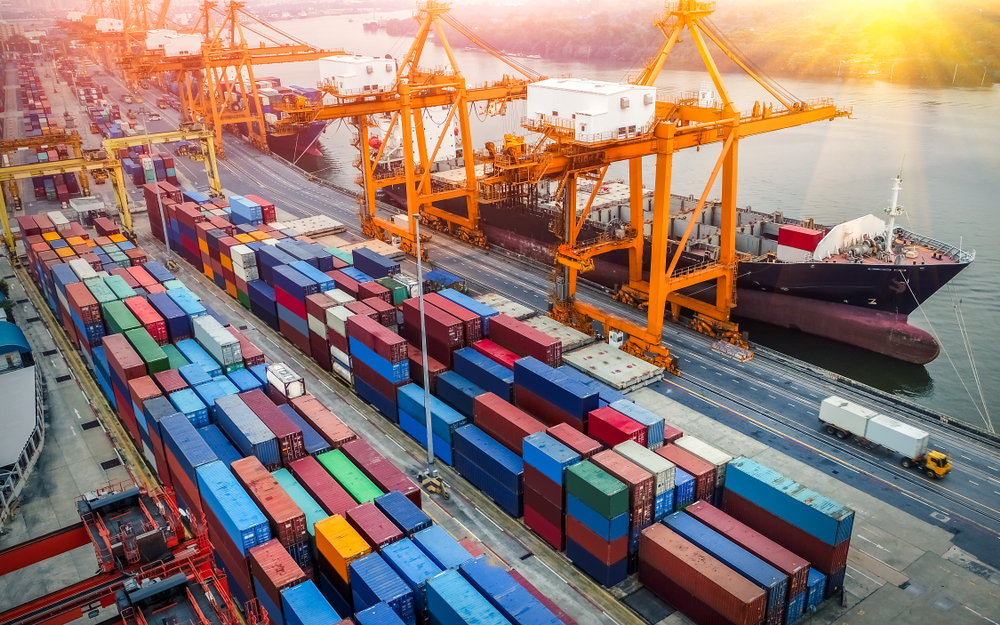
If you work in logistics, you probably already know what cabotage means and how the process works. But if the term is new to you, don’t worry: we’ll explain. Cabotage is waterway transport carried out between ports of the same country.
This type of transport is still little used in Brazil, but companies and government bodies are starting to see this mode of transport as a viable alternative. The idea is to increase mobility and, in doing so, improve the capacity to move goods and products.
This article was written precisely so you can learn more about the subject, understand the economic potential of cabotage, and get to know the main advantages of this kind of transport. Read on!
What does cabotage mean?
In simple terms, cabotage is the mode of transport used to ship goods by waterway between ports within the national territory. It can be two coastal ports, or one coastal port and one river port.
What is the role of cabotage?
In a country with such a long coastline, it makes sense to use this resource to shorten distances and speed up transport. The reality, however, is that there is a heavy dependence on road transport to move goods.
As a result, this process is not properly explored and remains a little-used option. Some states have five or more maritime terminals, and that infrastructure is already used for exporting and importing cargo.
So this is a resource that could be used over both short and long distances. Not to mention the economies of scale, since even a small ship can carry considerably more weight than a truck.
What are the benefits of cabotage?
Cabotage is a practice that can deliver economic, environmental, and social benefits. So we’ve listed a few advantages that help show how this process can be a differentiator for companies that invest in using it.
It helps cut costs
Companies already know that freight prices affect not only costs but also the consumer’s purchasing decision. That’s why it makes sense to look for more affordable alternatives.
Cabotage plays that role; in fact, among companies that use this service, there is a consensus that freight rates are lower than for other modes. Thanks to its cargo capacity, it can reduce operating costs, which means cabotage helps because it:
- uses less fuel per ton transported;
- has a lower cost per kilometer traveled on each trip; and
- carries a lower risk of accidents, damage, and cargo loss.
It needs little public investment
As we mentioned earlier, port infrastructure is already sufficient for this domestic logistics operation to be expanded. Compared with road transport, for example, it is clear that there is no need to maintain roads or carry out works so vehicles can travel safely.
In fact, programs such as BR do Mar have recently been developed with the aim of reducing dependence on road freight. The motivation behind the project was the 2018 truckers’ strike, which dealt a major blow to the economy.
It promotes environmental protection
One of the standout aspects of cabotage is that it uses 8 times less fuel to move the same amount of goods than other modes.
This difference makes the model sustainable, since it minimizes greenhouse gas emissions. This green credential adds even more value to this type of transport and attracts companies looking for more economical solutions with a lower environmental impact.
It makes the most of the waterway network
Brazil has 8,500 km of navigable coastline and another 42,000 km of river waterways. This potential is still not used as it should be, but a simple analysis shows how this option increases accessibility, especially in the North and Northeast regions.
This is strategic for moving ore extraction and industrial output from the northern states. So it’s worth considering this option as a viable alternative to expand access to consumer markets.
It reduces the accident rate
Road accidents are one of the main risks in logistics operations. Driver inattention, road conditions, and vehicles running without proper maintenance are among the leading causes of accidents.
The losses can be serious, given the damage to the fleet, the cargo, and above all the driver, who may be injured in a collision. Sea or river transport doesn’t carry the same potential and so proves to be the safer option.
How to overcome the obstacles to cabotage?
We already know the demand exists and could be met; what’s missing is a rigorous adaptation process so our ports can receive cargo bound for the domestic market.
For example, red tape needs to be cut to simplify inspection and loading. It is essential to adjust processes and bring industry, the main beneficiary of this mode, closer. There is also a need to create solutions that allow less-than-container-load cargo to be consolidated.
The elements that deserve attention are:
- fuel — diesel for road transport is quite competitive, while the fuel used in cabotage is made more expensive by taxation and by oil price swings on the international market;
- staff — the sector has faced a labor shortage for several years and struggles to attract professionals, since most are absorbed by the oil industry; and
- fleet renewal — although there are financial incentives to renew the merchant fleet, access to the benefit is slow, around two years — the slow release means companies don’t get support as quickly as they need.
Finally, it’s worth stressing that beyond knowing what cabotage means, professionals in the field should understand that this model is a differentiator. After all, more efficient and productive logistics is an advantage for the whole supply chain and for the Brazilian economy.
Have you ever had any experience with this type of transport? Leave your comment in the field below and share your opinion on the subject with us.